Door Alarms for Dementia: Sensor and Response Plan
Compare door alarms for dementia patients by who hears them and what follows: chimes, pagers, connected sensors, GPS and a clear response plan.
A door chime costs about $15. A connected sensor, $20-35. A pager kit, $60-90. GPS, $40 a month and up — all mid-2026 ballparks. The spread isn't features; it's who finds out the door opened, and how fast. Door alarms for dementia patients are two purchases — a sensor and a responder — and only one comes in the box.
The sensor is the cheap part
Inside every door sensor: a magnet and a reed switch. Door moves, circuit changes state. That's the whole product, at $15 or at $500.
In one house a husband sleeps behind a half-open bedroom door; the chime wakes him, and he meets his wife in the hallway looking for the bathroom. In the other, the alert lands on a phone twenty miles away, face-down and silent. Same sensor, different product.
Before comparing hardware, answer four questions:
- Which door: front, garden, garage — or the sliding patio door everyone forgets?
- Any opening, opening after 10 p.m., or a door left standing open?
- Who is close enough to get there?
- What happens on Tuesday, when the aide, the cleaner, and the grocery delivery all use it?
Door alarms for dementia patients, compared by responder
Sort by who receives the alert — that decides everything else. Prices are mid-2026 ballparks.
| Type | Who receives it | Right fit | Main limit |
|---|---|---|---|
| Local chime ($10-20) | Anyone in earshot | A caregiver sleeps in the same home | Hearing aids come out at night; closed doors swallow sound |
| Pager alarm ($60-90) | Whoever carries the pager | A caregiver moving around the property | Works on a body, not a counter |
| Connected sensor ($20-35 plus hub) | Any phone, anywhere | The responder lives elsewhere | Wi-Fi outages, silenced phones, the drive over |
| Pressure mat ($70-110) | Same options, earlier | Warning at bed-exit, before the door | Fires on every bathroom trip |
| GPS tracker ($40+/mo) | Family or monitoring center | Support after the person has left | Must be worn — unfamiliar objects get taken off |
A daughter we spoke with bought a pager kit that worked as advertised. The catch: the aide clocked out at six and left the pager on the counter, beeping at an empty kitchen. The hardware never failed. The plan did.
Loudness is not escalation. If alerts go to a phone, set that contact to Emergency Bypass on iPhone or an alarm-priority channel on Android — an alert that respects Do Not Disturb is a morning surprise, not an alarm. Then test the chain at night on everyone's usual settings.
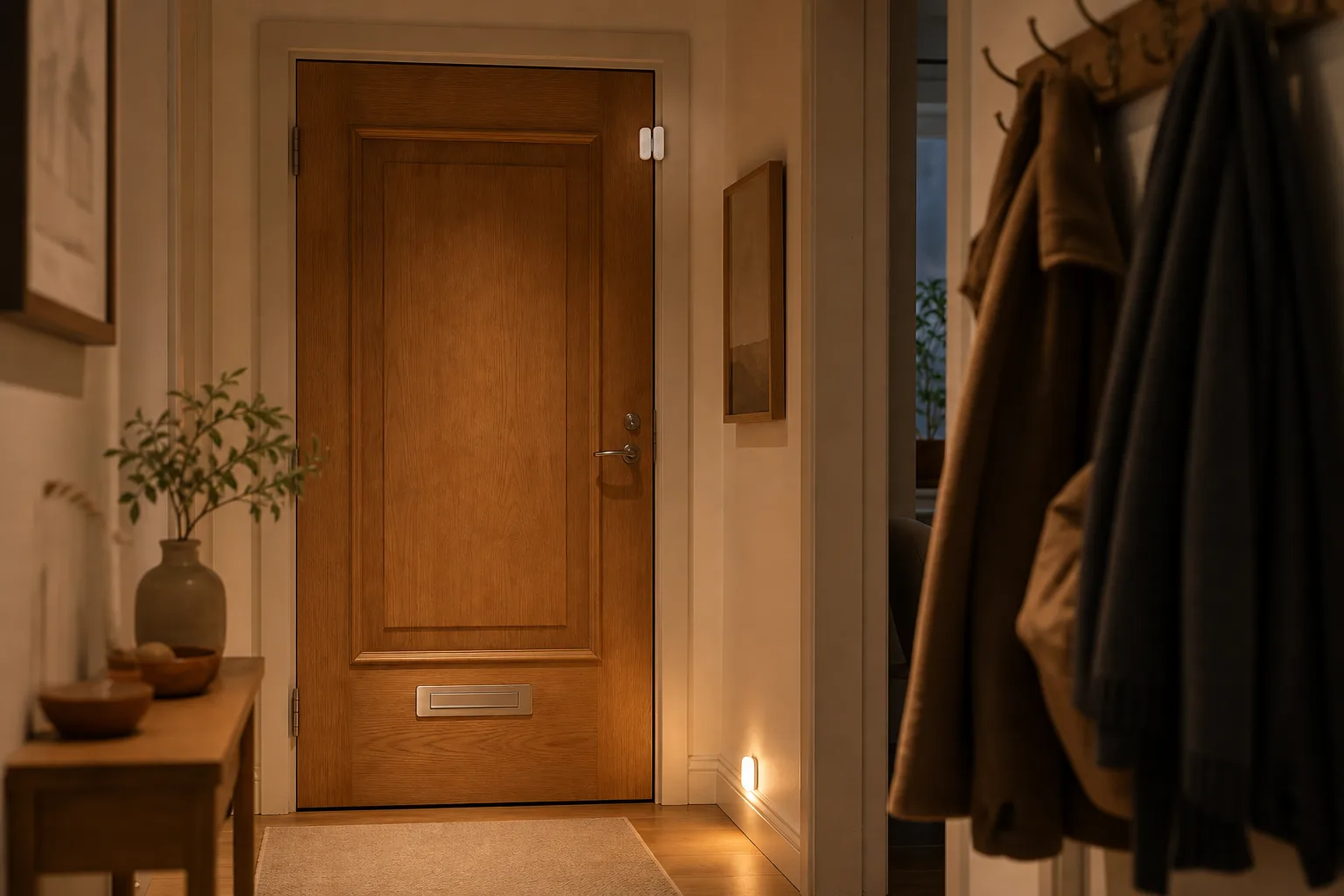
Write the door response before the first alert
"Family gets notified" is not a plan. Four steps, taped inside a cupboard:
- Check: call the house — landline first, then the caregiver's mobile.
- Attend: no answer after two tries, the named neighbor walks over. A $30 key lockbox means no waiting for a locksmith.
- Escalate: door open, person unreachable, not found inside — start the missing-person plan now.
- Log: the time, the door, what they said when you got there.
The log is where the pattern shows: three exits at dusk in one week is sundowning, or the old five-o'clock commute. And give every alert one owner per shift — two people who each assume the other answered is zero people.
Why they head for the door
A person with dementia rarely opens a door for no reason. They are going home — to a house sold in 1994. They need the toilet and can't find it. The sensor announces the walk; it can't cancel the reason for it.
The Alzheimer's Association wandering guidance is blunt: watch for patterns, meet the needs underneath — toileting, hydration, movement, boredom — and treat door alarms as one layer, because no device guarantees a person stays inside.
The cheap fixes are cue removal and camouflage. Keys, coat, and handbag out of sight — seeing them starts the script. A curtain over the door, or paint matched to the wall, hides it. A night light path to the bathroom removes the most common night trigger — our guide to elderly falls at night covers why those trips carry so much of the risk; an afternoon walk spends the restlessness before dusk does.
The National Institute on Aging home-safety checklist works room by room — worth an hour with a pen, because last year's safe house is not this year's. One hard line: never lock someone with dementia inside alone. A double-cylinder deadbolt is a fire trap for someone who can't work a key under stress.
Build the missing-person file before you need it
Every search minute spent hunting for a photo is lost. Build the file now:
- A photo from this season on your phone — not the framed portrait from 2015.
- Former addresses, old workplaces, the church: where old routes lead.
- Two neighbors with your number, plus a one-page medication list for responders.
- Local hazards: the canal, the main road, the bus stop whose route goes somewhere meaningful.
If the person is gone, split the jobs: one of you walks the property line — garden, garage, parked cars, bus shelter — while the other calls emergency services and says the word dementia. In most US states it triggers a Silver Alert. Enroll ahead too: MedicAlert runs 24/7 wandering support; many sheriff's offices run Project Lifesaver radio beacons.
Where OdeCare fits
OdeCare is camera-free home monitoring: radar and motion sensors in the rooms, plus door contacts. No cameras, no wearables. Cancel anytime.
The door contact buys you context. "Front door, 1:40 a.m." followed by no movement anywhere in the flat is an exit. Followed by kitchen activity, it's a snack. You see which in seconds — and never open a video feed, because there is none.
Three things we don't do. We don't block or lock a door — nothing in the kit prevents an exit. We don't do GPS — past the doorstep our sensors are blind. In a two-person household, radar reads movement, not identity — it won't swear who used the door.
Buy it after the plan is written, not instead of writing it.