How Much Does an Elderly Monitoring System Cost? (2026)
Elderly monitoring system cost in 2026: real prices for pendants, watches, cameras and sensor systems, 3-year totals, and the costs no pricing page lists.
11:40 on a Tuesday night, and you have nine tabs open. Two weeks ago your parent slipped stepping out of the shower — nothing broken, but nobody knew for four hours. Since then you've been pricing pendants, watches, cameras, sensors. Every tab says "from $19.95 a month." Not one of them shows what you'll actually have paid by year three, and none mentions the cost that matters most: a device that is bought, billed, and not being used.
This guide prices the whole category — real elderly monitoring system costs for 2026, upfront and over three years. If you're still deciding which type of elderly monitoring system fits your parent in the first place, start with that guide, then come back here for the money.
What the monthly fee actually buys
Monitoring prices look random until you see what the money pays for. Every invoice in this category buys some mix of three things:
- Hardware — the pendant, watch, camera, or sensors. Paid once, or buried inside the monthly fee.
- People — a call center staffed around the clock. This is the biggest cost driver: a $25–60 monthly fee almost always means humans on shift.
- Software and connectivity — cloud storage, a cellular connection, the family app. Cheap to run, so fees here are small.
Read any price through that lens and the market gets simple. A $3 monthly fee is cloud storage. A $40 fee is people. A $0 fee means the responder is you.
Elderly monitoring system costs compared: 3-year totals
The figures below are current US prices as of August 2026, taken from the provider pages and independent guides linked in each section. Three-year totals assume one wearable per person, or two to three cameras for a camera setup.
| System type | Upfront | Ongoing | 3-year total | The catch |
|---|---|---|---|---|
| Monitored pendant | $0–180 activation and equipment | $25–60/month; fall detection +$5–15 | ≈ $900–$2,340 | Only works if worn — and pressed |
| Fall-detection watch | $199–299 device | $10–20/month cellular (consumer watch) to $39–85/month (monitored alert watch) | ≈ $610–$3,360 | Dies without a daily charging habit |
| Indoor cameras (2–3 rooms) | $60–600 | $0–20/month cloud storage | ≈ $60–$1,320 | Someone has to watch; no lens in the bathroom, where the risk is |
| Passive sensor system (OdeCare) | $590–790 kit, professional installation and first 3 months included | $29/month after month three | ≈ $1,550–$1,750 | Doesn't dispatch anyone — it shortens the time before family knows |
Monitored pendants: $25–60 a month, plus the footnotes
The classic button-on-a-lanyard with a 24/7 call center behind it. SeniorLiving.org's cost guide puts home-based systems at $25–35 a month, mobile GPS units $10–20 more, and automatic fall detection at an extra $5–15. Activation and equipment fees run from $0 at some providers to about $180 at others, so ask for the first-invoice total, not the advertised rate. Over three years that's $900 at the cheapest and around $2,340 at the top.
Fall-detection watches: the device is the cheap part
Two routes here. A consumer smartwatch with fall detection — an Apple Watch SE, for example — costs about $249 for the device plus $10–20 a month for its own cellular line, per The Senior List's comparison; there is no monitoring fee because there is no monitoring center — the watch notifies emergency contacts directly. Dedicated medical-alert watches reviewed in NCOA's watch roundup run $199–299 for the device plus $38.95–$84.95 a month for monitoring. Both routes share a hidden dependency: a charger. A watch sitting on the nightstand at 3 a.m. detects nothing. Our fall-detection device comparison goes deeper on what each type actually catches.
Cameras: cheapest hardware, most expensive trade
Per Security.org's camera pricing guide, budget indoor cameras cost $30–100 each and mid-range models $100–200, with cloud storage plans from about $3 to $20 a month depending on brand. Two budget cameras with local storage can cover the main rooms for about $60, full stop. The unlisted price is different: someone has to actually watch, and nobody points a lens at the bathroom — the room where the riskiest minutes of an older adult's day happen. Many parents also simply unplug them.
Passive sensor systems: one kit price, one monthly fee
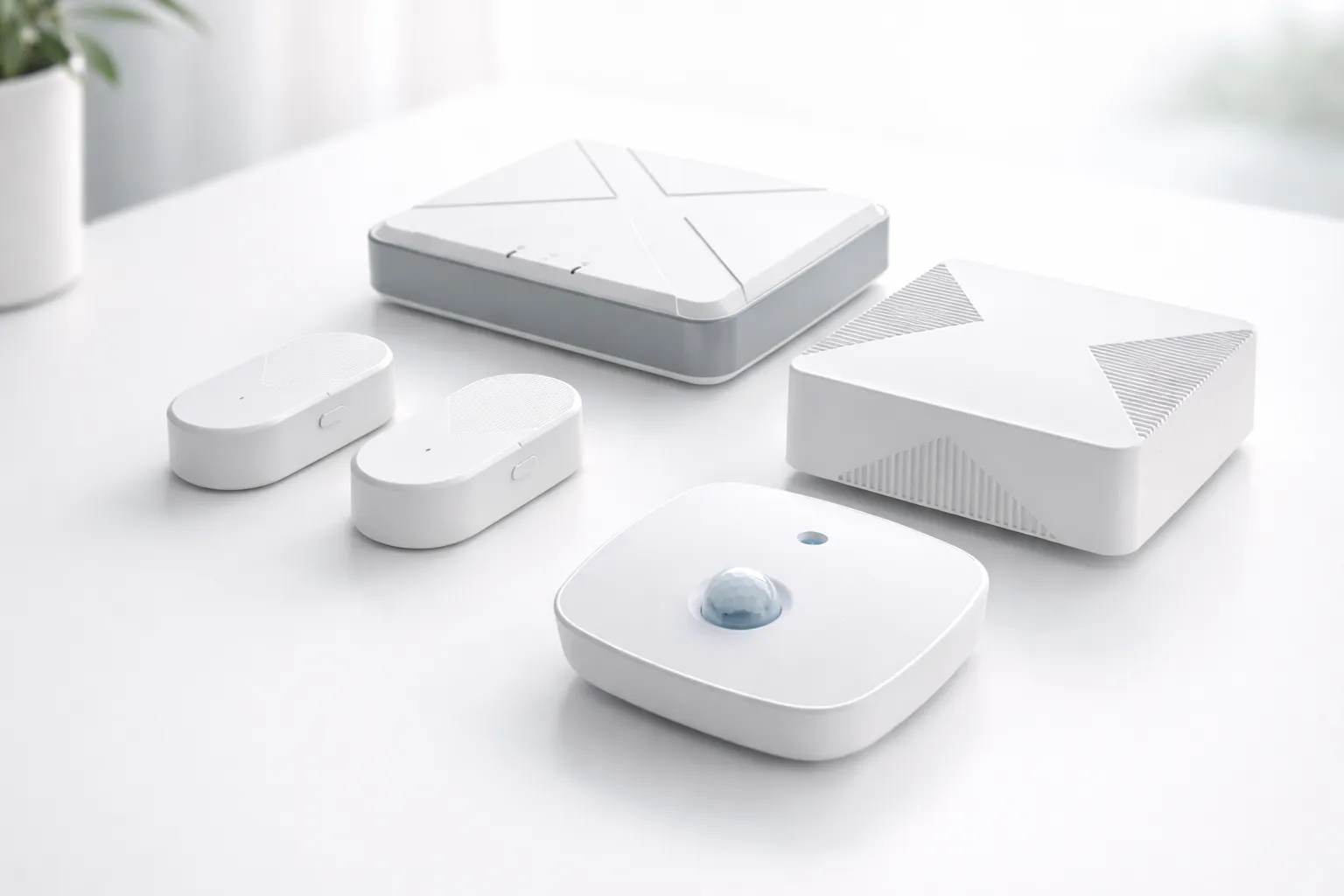
This is the category OdeCare is in, so here are our numbers plainly. Kits run $590 for a one-bedroom home up to $790 for larger homes. That price includes professional installation and the first three months of service; after that it's $29 a month, cancel anytime, and the equipment stays yours. Nothing is worn, charged, filmed, or listened to — small radar and presence sensors learn the household's daily rhythm, the family app shows "all is well" on most days, and an alert goes out when the pattern breaks: no movement by mid-morning, a bathroom stay that runs far too long, activity stopping at night. Data is processed inside the home; only alerts and short summaries leave it. The honest limit: no sensor lifts someone off the floor, and OdeCare doesn't send help — it shortens the time before family knows something is wrong. Exact kit contents and pricing by home size are on the shop page.
The cost nobody puts on the pricing page
Two costs decide whether any of the money above was well spent, and neither appears on a pricing page.
The abandoned device. In one study of real falls, 97% of worn emergency buttons went unpressed — out of reach, forgotten, or "I didn't want to make a fuss." That's the buttons that were being worn; plenty never leave the drawer at all. Every dollar spent on a pendant that hangs off a cup hook buys exactly nothing, which makes the cheapest plan on this page potentially the worst value on it.
The long lie. The CDC reports that one in four adults over 65 falls each year, and what a fall ends up costing depends less on the device than on how fast someone is found. In Gurley et al.'s New England Journal of Medicine study, mortality was 12% among people helpless for less than an hour — and 67% among those helpless for more than 72 hours. Of those who survived a long lie, 62% could not return to independent living. Set any subscription next to the price of a care home placement and the question stops being "which system is cheapest" and becomes "which one actually cuts the hours nobody knew."
Will Medicare or insurance pay?
Usually not. Original Medicare does not cover medical alert systems or home monitoring as durable medical equipment; some Medicare Advantage plans offer an allowance, and a few state Medicaid waiver programs cover monitored pendants. The details, and the exact questions to ask a plan, are in our guide to Medicare and medical alert systems. If the budget is the hard constraint, there are cheaper routes than anything in the table: systems with no monthly fee and free or subsidized programs for seniors both exist, with trade-offs each guide spells out.
Choose by your parent's behavior, not the price
The right system is the one that matches what your parent already does, not what the family hopes they'll start doing. Four questions settle it:
- Do they reliably wear something every day already — a watch, glasses, a ring? Then a pendant or alert watch has a real chance. If a previous wearable is already in a drawer, a second one will join it.
- Will they charge a device every night without reminders? If not, cross off every watch. The failure happens silently, at exactly the hour it matters.
- Who will actually watch the camera feed — at 3 a.m., on vacation, in month eight? Cameras are cheap hardware and expensive attention, and they still leave the bathroom dark.
- Do they refuse anything on the body and hate being watched? Then passive sensors are the only category designed for the person they actually are, not the patient a brochure imagines.
Price the three years, yes. But price the habit first — the math only works on a system that's still in use when the bad morning comes.