ADT vs Lively vs Bay Alarm: Fall Detection Compared
Compare ADT, Lively and Bay Alarm fall detection: which device detects falls, what a real year costs, who answers, and what happens after the alert.
Tuesday, 9:40 in the morning. Your mother steps out of the shower, reaches for the towel bar, misses, and goes down on the tile. The pendant with fall detection — the one you spent three weekends comparing — hangs on her bedpost; she takes it off to wash and forgets it after. ADT, Lively and Bay Alarm Medical all sell fall detection that works as designed. None sells a device that puts itself back on.
Quick verdict
ADT gives you two routes: a neck pendant on Medical Alert Plus, or detection built straight into the On-The-Go mobile unit. Lively puts fall detection on exactly one device — the neck-worn Mobile2. A Jitterbug phone does not detect falls, whatever the store display implied. Bay Alarm Medical offers the widest spread of form factors, including the only smartwatch here with optional fall detection.
Why the automatic part matters: the CDC counts one in four adults over 65 falling every year, and in one study of real falls, 97% of worn emergency buttons went unpressed. People faint, panic, or land on the arm that wears the button — the button keeps failing at the exact moment it was bought for.
But detection only rides on a worn device. So the real contest is pendant vs lanyard unit vs watch — and which survives your parent's habits. Everything below comes from the companies' own product pages, checked July 2026.
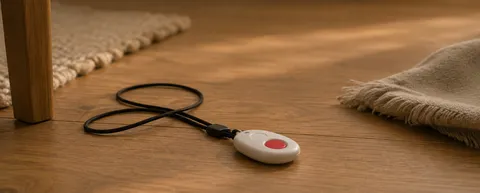
How each system handles fall detection
ADT: two ways in
ADT's medical-alert FAQ lists fall detection as an option on Medical Alert Plus and On-The-Go. Plus is the at-home setup: a base station plus a detection pendant on the neck. On-The-Go is a GPS mobile unit with detection built in — one object, nothing extra around the neck.
On a detected fall, the device opens a line to ADT's monitoring center. An agent tries two-way voice; no answer, and the agent works your pre-written plan — your cell, the neighbor with the spare key, EMS. ADT prints its own limit: it does not catch every fall; press the button when able.
Best fit: a household that wants a big monitored brand and will keep the device on the person, not the hallway hook.
Lively: the phone is not the detector
Lively's lineup makes the choice look wider than it is. Its fall-detection page is specific: the feature exists on Mobile2, powered on, worn around the neck on the supplied lanyard. In a purse, pocket or belt clip, real falls slip past the sensor.
When Mobile2 suspects a fall, it plays a cancel prompt — a grace window for the times she just sat down hard — then connects an Urgent Response agent while Lively Link pings a linked family phone. Jitterbug phones offer the button route, nothing automatic.
Best fit: someone who genuinely accepts a lanyard at the collarbone all day — not a way to get fall detection from the phone she already owns.
Bay Alarm Medical: the watch option
Bay Alarm Medical's fall-detection page offers the feature across its SOS line. The interesting one is the watch: the SOS Smartwatch page now lists optional fall detection — comparisons saying otherwise are working from an old spec sheet.
The current watch guide spells out the trigger: a sudden downward movement, then 30 seconds without movement. Get moving quickly and it stays silent — a deliberate trade against false alarms. It still tells the wearer to press SOS when able.
Best fit: a parent who already wears a watch daily; replacing an existing habit beats installing a new one.
Run all three through the same fall
Give every system the same event: she stands up from the recliner after lunch, her knee buckles, and she slides down the side of the chair to the carpet. Slow, quiet, no impact spike. The phone is charging in the kitchen.
| Question | ADT | Lively | Bay Alarm Medical |
|---|---|---|---|
| What must be on her body? | The Plus neck pendant, or the On-The-Go unit | Mobile2 on its neck lanyard, powered on | The pendant, mobile unit or charged watch you picked |
| What fires the alert? | The device's fall algorithm — no promise it reads a slow slide | Mobile2's detection, then a cancel prompt, then an agent | Sudden drop plus 30 still seconds; a gentle slide is the hard case |
| Who answers? | ADT monitoring center, then your call list | Urgent Response agent; Lively Link pings family | Bay Alarm monitoring center, then your call list |
| Most likely real-world failure | Pendant on the bedpost during the shower hour | Mobile2 in the purse instead of on the lanyard | Watch on the charger, or a fall with no sharp drop |
This runs on a clock. Tinetti's New England Journal of Medicine research found most older adults who fall cannot get up without help, and lying unhelped past the hour mark sharply worsens what follows. Every row above is one question: does the alert fire in minute two — or not at all?
So test with a body, not a brochure. One normal week wearing the exact device — shower, garden, groceries, bed. Place a live test call from the bathroom floor, phone out of reach, and ask: who speaks first, what happens when she does not answer, and how EMS gets past a deadbolted door.
The complete cost
Monitored medical alerts cluster around $25-45 a month as of mid-2026; the money pays operators on shift, not the plastic. Fall detection is typically a ten-dollar add-on; Lively folds it into its top tier, pushing the real monthly into the mid-thirties.
Hardware stacks on top: Mobile2 is about fifty dollars, the SOS Smartwatch near $180, and ADT folds activation and shipping in at checkout. Those are mid-2026 ballparks — pin down your exact cart before signing.
Then compare two totals: everything paid before the system works, and an ordinary year after the promotion — base plan, fall detection, protection plans, a second user. Our medical-alert buyer checklist keeps all three sales calls answering the same questions, including what it costs to return the equipment and stop.
When a wearable is the wrong format
A daughter we spoke with went through two pendants and a watch in eighteen months. Her father wore each new device for about two weeks, then started leaving it in the bathroom before bed and stopped picking it back up. Switching brands changed the logo on the box, not the behavior.
For that household, take the device off the person entirely. OdeCare is what we build for exactly this: radar sensors installed where falls happen — bathroom, bedroom, the hallway between. They notice a person going down and the stillness after, and alert family with nothing to wear, charge or press. No cameras, so nobody is filmed stepping out of the shower.
Three things OdeCare does not do. It does not cover the sidewalk — home only, so a parent often out alone still needs a mobile device. It never records video or audio; that is the point of radar. And it needs mains power and internet, like every monitor on this page.
How to choose
Choose ADT if the big monitored brand appeals and the pendant or On-The-Go unit passed a real trial week. Choose Lively if the Mobile2 lanyard is still worn on day 14, not just tolerated for the demo. Choose Bay Alarm Medical if the watch matches an existing habit — with the charging hour in a supervised part of the day.
And if none of the three devices survived the trial week, stop auditioning wearable brands. Solve where the alert comes from first — her body or her rooms — and only then pick who answers it.