Best Medical Alert System With Fall Detection
The best medical alert system with fall detection, chosen by situation: named picks from ~$25/month, what accelerometers miss, and the no-wearable option.
The best medical alert system with fall detection isn't a brand — it's a match. Answer two questions: will the device actually be worn, and who answers at 3 a.m.? Here are the picks by situation, the prices behind the promos, and the one failure mode no pendant escapes.
The short answer: best by situation
| Your situation | Pick this | Typical cost (mid-2026) |
|---|---|---|
| Mostly at home, will wear a pendant | Monitored home system — Medical Guardian, Bay Alarm Medical or Lifeline, with the fall-detection pendant | $30–45/mo incl. add-on |
| Out of the house most days | Mobile GPS unit — Lively Mobile2 or Medical Guardian's mobile line | $25–50/mo + device |
| Refuses a pendant, might wear a watch | Medical-alert watch (MGMove-class) — or an Apple Watch | $35–45/mo, or watch price only |
| Already lives in the Apple world | Apple Watch SE or newer — fall detection and Emergency SOS built in, no alert subscription | $250+ once, ~$10/mo cellular |
| Won't wear anything | Installed ambient sensors (radar, no camera) — OdeCare's category | Installed kit + monthly plan |
Prices are advertised US ballparks as of mid-2026 — verify the renewal price in writing before signing, because promos are where these companies make their money back. For the big names row by row, see our Lifeline fall detection review and Medical Guardian alternatives. The rest of this guide explains how to pick your row, and what every row has in common: a detector is only as good as the person wearing it and the human who answers.
What fall detection actually detects
Pendants and watches detect falls with an accelerometer: the algorithm looks for a signature — sudden acceleration, impact, then stillness or a changed orientation. That works well for the fall everyone pictures: a hard, fast drop.
It works badly for the falls older adults actually have. The slow slide down a wall while holding on. The crumple sideways from a chair. The knees folding gently in the bathroom. No dramatic impact, no signature — no alert. This is why ADT, Medical Guardian, Lively and Bay Alarm Medical all carry the same sentence in their fine print: automatic fall detection cannot detect every fall. They're not being modest; they're being accurate.
And there's a second failure mode nobody's spec sheet mentions: in one study of real-world falls, 97% of worn emergency buttons went unpressed — the button was there, the press never came. Out of reach, confusion, embarrassment, "I didn't want to bother anyone." Fall detection exists precisely because people don't press buttons; then it inherits the same dependency — being worn. Our fall detection devices guide maps every mechanism and its blind spots.
Monitored vs family-first: who actually picks up
Detection is the easy half. The alert then has to reach a human who does something, and there are exactly two honest models.
A monitoring center ($25–45/month) means a trained operator answers within seconds, around the clock — talks to your parent through the speaker, assesses, dispatches 911 (US) or 999 (UK) if needed. Nobody sleeps through it. The trade-offs: your parent talks to a stranger, and family finds out minutes later, not seconds.
Family-first routing (free or cheap) sends the alert to people who know the context — who are also sometimes asleep, driving, or abroad. It can absolutely work, but only as a system: a primary, a backup, a local keyholder, and phones set to let the alert punch through Do Not Disturb. If you can't name all three people right now, that's your answer: pay for the center.
Why the urgency about answering at all? Tinetti's research in the New England Journal of Medicine found most older people who fall can't get up without help — and lying unhelped for over an hour sharply worsens outcomes. The fall usually isn't the catastrophe. The hour on the floor is.
Home vs mobile: where the coverage ends
Home systems pair a base station with a pendant that works within a few hundred feet. Fine for someone mostly homebound — but test the actual house: thick walls eat range, and "the garden is covered" is an assumption until you've pressed the button from the far fence.
Mobile systems like Lively Mobile2 add cellular and GPS, so the button works at the store and on walks. The costs: a heavier device, a charging routine — and every hour on the charger is an hour uncovered, and coverage that ends where the network does. Buy mobile because the routine demands it, not because it sounds safer.
Watches vs pendants: the acceptance trade
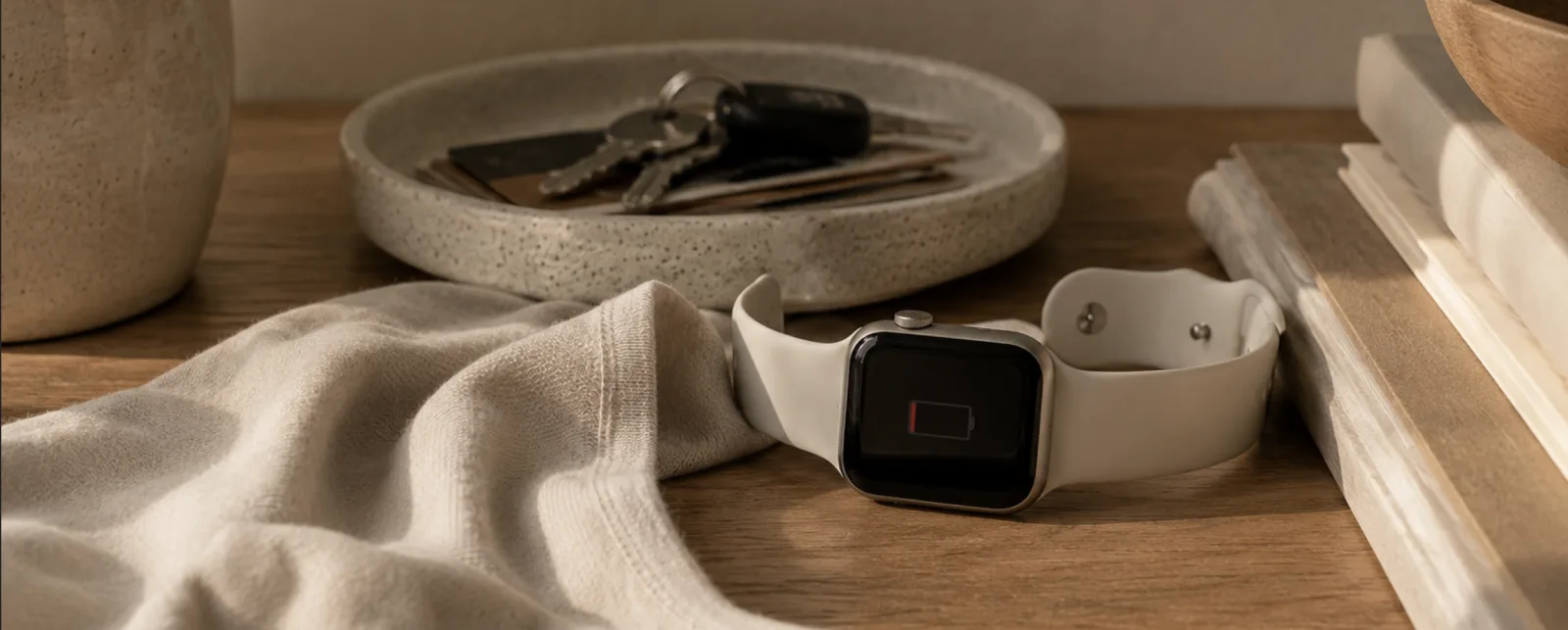
A pendant marks its wearer as frail — that's why so many end up in drawers. A watch just looks like a watch, which is why a parent who refuses the pendant will sometimes wear one. That psychology is worth real money; it's the difference between a device that's worn and one that's stored.
The price of the psychology is battery. A pendant runs weeks to years on a charge; a smartwatch wants the charger nightly — and a watch charging on the nightstand at 3 a.m. detects exactly nothing. If the watch route fits, our fall detection watches guide compares the field, and the Apple Watch guide covers the setup and blind spots for the most common choice.
The three pricing traps
Trap one: month 13. The advertised rate is a promo; the renewal rate is the business model. Get the ordinary renewal price in writing — at the big providers the jump is commonly $5–15/month.
Trap two: the stack. Fall detection is a $5–10/month add-on nearly everywhere. Activation runs $0–100, shipping and "processing" appear at checkout, a second user costs extra. Compare year-one totals, not sticker rates.
Trap three: leaving. Cancellation is where cheap plans get expensive: notice periods, equipment return fees, unrefunded prepaid years — and the two most common reasons service ends are a move to assisted living and a death. Ask bluntly what happens in both cases. Our ten questions to ask before signing is built for that sales call.
When a wearable is the wrong format
Every option above shares one dependency: something on the body, worn correctly, charged, and pressed or triggered. For a lot of families that dependency holds. For the rest — the pendant on the hook, the watch in the drawer, the parent with dementia who removes anything unfamiliar — the best wearable is the one you stop trying to buy.
That's the case OdeCare was built for. Small radar and motion sensors on the walls — no camera, no microphone — learn the household's normal rhythm and alert the family when it breaks: a fall-pattern in the bathroom, a night exit with no return, a morning that never starts. Nothing to wear, press, or charge, and the bathroom is covered precisely because nothing films anything.
It covers the two places wearables fail — the bathroom and the night — because nothing needs to be worn there. The family app shows the day's rhythm in plain words and speaks up when the pattern breaks. For parents who spend real time outside the house, families pair it with a watch or mobile pendant and let the sensors own the home.
Frequently asked questions
What is the best medical alert system with fall detection?
Match the system to the routine, not the ratings: a monitored pendant for the homebound parent who accepts wearing one, a mobile GPS unit for daily errands, a watch for the pendant-refuser, installed sensors when nothing will be worn. Brands matter less than the row — most big providers are competent once the format is right.
How accurate is fall detection in pendants and watches?
Strong on hard falls, weak on slow ones — and every major provider says in writing that no detector catches everything. Judge the whole chain: detection, then who answers, then who gets through the door.
How much does fall detection add to the monthly cost?
Usually $5–10/month on top of base monitoring. The bigger numbers hide elsewhere: activation, equipment, and the month-13 renewal jump.
What if my parent won't wear a pendant or a watch?
Stop optimizing the wearable and remove it: wall-mounted radar sensors detect fall patterns with nothing on the body. Home-only — pair with a mobile device if the routine leaves the house.
How to make the final choice
Pick your row in the table, then stress-test the candidate against five real moments before money moves: a night-time bathroom trip, the shower, a dead or charging battery, a missed first call, and a locked front door with help outside. The system that survives all five — worn, answered, and reachable — is the best one, whatever the brand on the box.